In the demanding world of mining, efficient operations rely heavily on advanced technology. Hard Rock Drills play a critical role in this sector. According to the Global Mining Industry Report 2023, these drills enhance productivity and safety. They reduce operational costs significantly when used correctly.
Expert John Smith, a renowned figure in mining technology, emphasizes, "The right Hard Rock Drills can transform mining efficiency." Smith's insight underlines the necessity of selecting quality drills that fit specific tasks. Different geological conditions require different approaches, which is often overlooked.
Many mining operations still struggle with outdated equipment. This leads to inefficiencies and increased risk. Constant adaptation is necessary in this ever-evolving landscape. Embracing innovative drilling technology is essential for future success. The right Hard Rock Drills not only improve extraction rates but also ensure worker safety. As the industry pushes forward, the importance of quality drilling cannot be overstated.
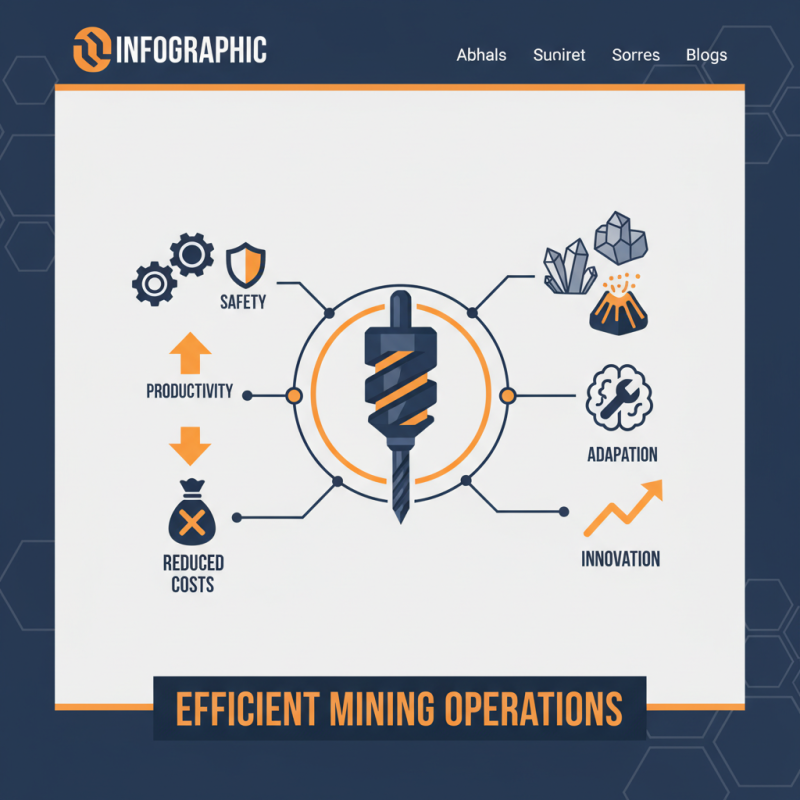
Efficient mining operations heavily depend on choosing the right hard rock drills. A recent report indicated that the global hard rock drill market is expected to grow at a CAGR of 4.8% from 2023 to 2028. This growth highlights the increasing demand for effective drilling solutions in the mining sector. Advanced drills not only enhance productivity but also improve safety measures on site.
High-performance drills increase penetration rates. According to industry data, a top-performing hard rock drill can achieve penetration rates of 25 meters per hour. This efficiency significantly reduces operational time and cost. However, not every drill suits every condition. Environmental factors and rock types must be considered. Poor selection can lead to delays and excessive wear.
Moreover, maintenance is crucial. Neglecting regular upkeep can result in breakdowns, impacting operations negatively. Reports show that maintenance accounts for approximately 10% of operating budgets yet can prevent up to 30% of unexpected failures. Hence, investing in quality drills and maintenance strategies is vital for achieving optimal efficiency in hard rock mining operations.
Hard rock drilling is a crucial technique in mining operations. It involves precise methods tailored to extract valuable minerals from geological formations. Various techniques are employed to enhance efficiency and ensure safety during drilling. For instance, rotary drilling utilizes a rotating drill bit to penetrate hard rock, creating boreholes. This method is effective, yet it can generate significant heat and vibrations that may affect surrounding structures.
Moreover, percussion drilling is another common technique. It employs heavy tools that strike the rock surface, breaking it apart. This method accelerates drilling through tough terrains. However, the technique can lead to excessive wear on equipment, necessitating regular maintenance. Operators often face challenges in balancing speed and equipment longevity.
Another intriguing process is diamond core drilling, which allows for sample collection without extensive disruption. It utilizes diamond-tipped bits to extract cylindrical samples from the earth. While highly effective, this method can be costly and requires skilled operators to ensure accuracy. Each of these techniques presents unique challenges and advantages, demanding a thoughtful approach to optimize performance in hard rock mining.
This chart represents the efficiency ratings of the top 10 hard rock drills used in mining operations, showcasing their performance and reliability in various conditions.
When examining key performance metrics for hard rock drills, speed and efficiency stand out. These factors determine how effectively a mining operation can process material. Drilling speed affects the overall production rate. Efficient drills reduce downtime, maximizing output. Optimal drilling conditions enhance both speed and longevity.
Tips: Regular maintenance is critical for keeping drills running efficiently. Monitor wear and tear closely to prevent unexpected failures. Proper training for operators also plays a vital role. Skilled users can adapt drills to varying ground conditions, enhancing overall performance.
Efficiency can sometimes be compromised by external factors. Geological variability can slow down drilling speeds. Additionally, environmental challenges may hinder operations. Regular assessments can help identify these issues early on. Analyze performance data frequently to make informed adjustments. Being proactive in addressing these challenges can lead to continuous improvement in drilling efficiency.
Drill bit technology plays a crucial role in enhancing mining operations. Modern drill bits come with specialized designs tailored for hard rock conditions. These advancements improve efficiency and reduce downtime. The right drill bit can penetrate tough materials more effectively. This might lead to faster excavation rates, but it requires careful consideration of hardness and type of rock.
Optimizing drill bit selection can be challenging. Variables such as rock formation and moisture level impact performance. Selecting an inappropriate bit may result in increased wear and tear. Moreover, frequent replacements can inflate operational costs. Operators must continuously assess their environments and bit performance to avoid these pitfalls.
Investing in the right technology is essential for efficient operations. Data-driven decisions can enhance overall productivity. However, technology alone cannot replace skilled operators. Experience in handling complex geological conditions is invaluable. Blending technology with human expertise can lead to significant improvements in hard rock mining efficiency.
Safety is paramount in hard rock drilling operations. The industry faces inherent risks. A report from the World Health Organization suggests that construction and mining workers are at a higher risk of injuries. Effective safety protocols are essential to mitigate these dangers. These include well-defined safety training programs and regular equipment checks.
Innovations play a crucial role in enhancing safety. Advanced drilling technologies improve precision and reduce human errors. According to the Mining Industry Standards Council, automated drilling systems can lower accident rates by up to 30%. Additionally, these systems often provide real-time data, allowing for quicker decision-making. This increases the overall safety of the operation.
However, challenges remain. Many companies struggle with implementing these new technologies, often citing high costs or resistance to change. Despite the potential safety benefits, not all operations have adopted new protocols. Continuous training and awareness are necessary to ensure the workforce is prepared and safety standards are strictly followed. A focus on both innovation and practical safety measures is essential for the future of hard rock drilling.
| Drill Model | Drilling Depth (m) | Weight (kg) | Rotational Speed (RPM) | Average Rate of Penetration (m/h) | Safety Features |
|---|---|---|---|---|---|
| Model A | 200 | 1500 | 150 | 30 | Automatic Shut-off, Vibration Monitoring |
| Model B | 250 | 1600 | 200 | 35 | Load Monitoring, Emergency Braking |
| Model C | 300 | 1700 | 180 | 28 | Fire Detection, Operator Alerts |
| Model D | 220 | 1400 | 175 | 32 | Emergency Stop, Spill Prevention |
| Model E | 280 | 1550 | 190 | 30 | Real-time Data Monitoring, Training Mode |
| Model F | 210 | 1450 | 160 | 29 | Operator Safety Training, Safety Shields |
| Model G | 250 | 1600 | 175 | 33 | Hydraulic Stability Control, Dust Suppression |
| Model H | 260 | 1650 | 190 | 34 | Overload Protection, Anti-vibration System |
| Model I | 220 | 1500 | 160 | 31 | Drill Stability Monitor, Lock-Out Tag-Out System |
| Model J | 300 | 1750 | 155 | 27 | Comprehensive Safety Training, PPE Integration |
Efficient drilling techniques significantly influence the economic outcomes of mining projects. The cost-benefit analysis indicates that reducing drilling time can enhance overall project margins. For example, according to a report by the International Council on Mining and Metals, improving drilling efficiency can cut operational costs by up to 30%. Such reductions not only boost profitability but also attract additional investments.
Moreover, effective drilling can have a substantial impact on resource recovery rates. A study published by Mining Journal highlights that optimized drilling practices can increase extraction rates by about 15%. This leads to better resource management and less wastage of valuable minerals. However, achieving efficiency is not without its challenges. Many operations struggle with equipment limitations and skilled workforce shortages. Addressing these issues is vital for maximizing drilling performance and, ultimately, financial returns.
Investing in advanced drilling technologies is essential. However, it requires substantial upfront capital. A balance between technology investment and operational training is needed. Companies often overlook the long-term gains that come from investing in skilled labor. Therefore, while the push for efficiency is commendable, a holistic approach is crucial for sustainable mining operations.
: Speed and efficiency are key metrics that impact material processing in mining operations.
Higher drilling speed increases the overall production rate of the mining operation.
It helps keep drills running efficiently and prevents unexpected failures that could halt operations.
Geological variability and environmental challenges can slow down drilling speeds and hinder operations.
Proper training allows operators to adapt to varying conditions, enhancing overall performance.
The right drill bit can effectively penetrate tough materials, impacting excavation speed and reducing wear.
Variables like rock formation and moisture levels are critical to assess for optimal performance.
No, skilled operators are essential to handle complex geological conditions along with advanced technology.
It may lead to increased wear and tear, requiring frequent replacements and higher operational costs.
Regular performance evaluations allow for early identification of issues, fostering ongoing improvements.
The article "Top 10 Hard Rock Drills for Efficient Mining Operations" explores various hard rock drilling techniques utilized in the mining industry. It discusses the importance of speed and efficiency as key performance metrics for hard rock drills, emphasizing how advancements in drill bit technology have significantly enhanced overall performance.
Moreover, the article highlights essential safety protocols and innovative practices that are critical for maintaining operational safety in hard rock drilling. The economic impact of efficient drilling on mining projects is also examined, showcasing how optimized drilling processes can lead to cost savings and improved project outcomes. Overall, the piece provides valuable insights into the advancements and best practices in hard rock drilling, aiming to improve mining operations.

KAT DRILLING