Choosing the right Air Powered Rock Drill can be challenging. The construction industry emphasizes efficiency and safety. A report by MarketsandMarkets states that the global market for pneumatic tools is expected to reach $9 billion by 2025. This growth highlights the importance of choosing reliable equipment.
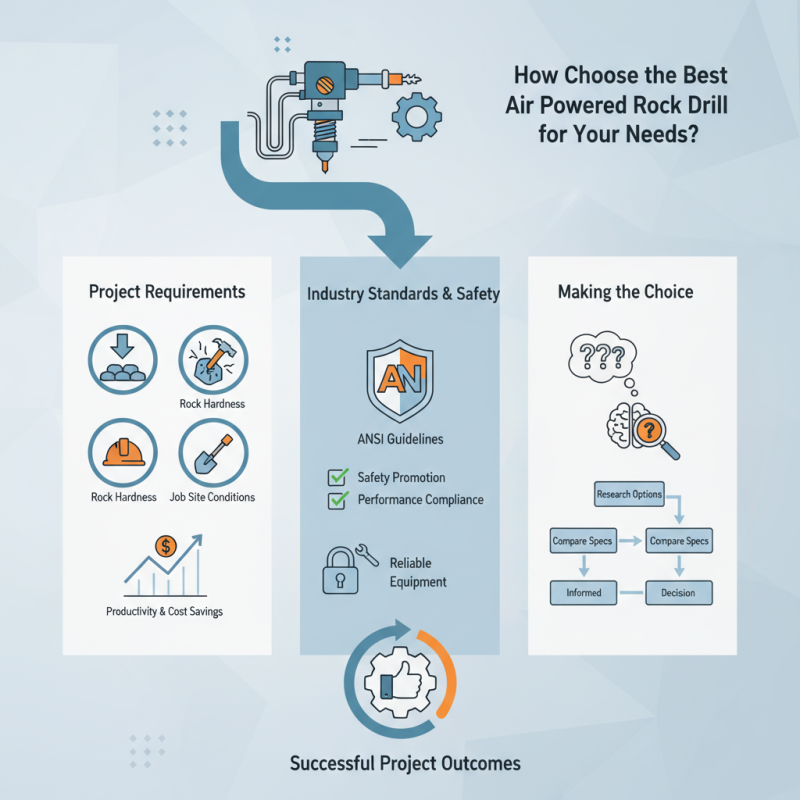
When selecting an Air Powered Rock Drill, consider the specific requirements of your project. Factors such as drilling depth, rock hardness, and job site conditions play a crucial role. Many users overlook these details, leading to unsatisfactory results. A suitable drill can enhance productivity and reduce operational costs significantly.
Additionally, ensure the drill’s specifications match industry standards. The American National Standards Institute (ANSI) provides valuable guidelines. Adhering to these standards promotes safety and performance. An informed choice can make all the difference in achieving project goals. However, many choices can lead to confusion. Take time to reflect on your options carefully.
Understanding Air Powered Rock Drills: Features and Specifications
Air powered rock drills are essential tools in various industries, specifically in construction and mining. Understanding their features and specifications can significantly influence your choice. One key feature is the power-to-weight ratio. A study by the International Society for Rock Mechanics suggests that an optimal ratio enhances efficiency, reducing operator fatigue and increasing productivity on-site.
Another critical specification to consider is the drill's impact energy. Higher impact energy facilitates faster drilling in hard rock formations. According to a recent report from the Mining Association, drills with an energy rating above 50 joules consistently outperform lower-rated models in tough conditions. Noise levels also matter. Quieter drills improve safety for operators and nearby workers.
Tips: Always check pneumatic pressure requirements. Matching the pressure to your tool's specifications can enhance performance. Regular maintenance is crucial; neglected equipment can lead to inefficiencies. Lastly, consider the drill's durability. A well-constructed drill can save costs in the long run.
Choosing the right air powered rock drill requires careful consideration of these features. Reflect on your specific needs and conditions. What works in one scenario may not be effective in another.
Evaluating Your Specific Drilling Needs and Application Requirements
When considering which air-powered rock drill to choose, it's vital to assess your specific drilling needs. The type of material you will be drilling into is a significant factor. Soft rock, hard rock, and even concrete require different drill capabilities. Various drill models have distinct power levels and bits to accommodate this. Take time to study your project's demands. Consider the depth and diameter of the holes required as well.
In addition, think about the environment where you'll operate the drill. Will it be in tight spaces or open areas? Weight and size of the drill can affect your efficiency in confined spaces. Additionally, evaluate the expected usage duration. A lightweight drill may suit short tasks, while heavier models may offer more power for extensive applications. A mismatch can lead to fatigue or inefficiency, prompting the need for reconsideration.
Beyond the technical aspects, don’t overlook comfort and safety features. A well-designed grip and vibration reduction are essential for long-term use. Balancing power with comfort can enhance productivity. Remember, sometimes it's better to invest in quality. Reflecting on these aspects could mean the difference between project success and challenges.
Air Powered Rock Drill Performance Comparison
This bar chart illustrates the performance comparison of various air powered rock drills based on three key metrics: Compression Power, Weight, and Drilling Speed. Understanding these metrics is crucial for selecting the best drill for your specific applications.
Key Factors to Consider When Choosing an Air Powered Rock Drill
Choosing the right air powered rock drill is crucial for optimal performance in various applications, such as mining and construction. Understanding key factors is vital. First, consider the drill's power output. A standard air rock drill ranges from 1.5 to 5 horsepower. Higher horsepower typically leads to faster drilling speeds, which can enhance productivity. However, you must evaluate the specific task at hand. A more powerful drill may not be necessary for lighter tasks.
Next, look into the drill’s weight and design. Lightweight drills can improve maneuverability, reducing operator fatigue. According to industry reports, operators may work up to 30% longer with lighter equipment. Nevertheless, maintaining stability with heavier drills can be advantageous in tougher materials. Ensure the drill’s design allows for easy handling in your environment.
Additionally, maintenance and durability are key considerations. Research indicates that proper maintenance can extend a drill's life by up to 50%. Look for features that simplify maintenance, such as accessible parts and robust materials. Remember, a durable drill will save costs in the long run. While knowledge is essential, understanding your unique needs and conditions is equally important. This reflection can guide you toward a well-informed choice that meets your operational requirements effectively.
Comparing Different Brands and Models for Performance and Reliability
When selecting an air-powered rock drill, comparing different brands and models is vital. Each brand offers unique features and performance levels. Some drills are designed for heavy-duty tasks. Others focus on lightweight operations. Understanding these differences helps you find the right fit for your workload.
Consider the specifications of each model. Look for variables such as drilling speed, power output, and durability. Some drills perform better in rocky terrains, while others excel in softer soils. Pay attention to user reviews and expert opinions. They often provide insights into reliability and longevity.
However, remember that not every model will meet your expectations. Some may lack power in demanding conditions. Others might be less comfortable for extended use. It’s crucial to weigh these imperfections against your needs. A drill's effectiveness ultimately hinges on your specific requirements and working environment.
How to Choose the Best Air Powered Rock Drill for Your Needs?
| Model |
Weight (lbs) |
Drilling Diameter (inches) |
Air Consumption (CFM) |
Max Pressure (PSI) |
Noise Level (dB) |
Price ($) |
| Model A |
35 |
2.5 |
30 |
90 |
85 |
500 |
| Model B |
40 |
3.0 |
35 |
100 |
88 |
600 |
| Model C |
30 |
2.0 |
25 |
85 |
80 |
450 |
Maintenance and Safety Considerations for Air Powered Rock Drills
Proper maintenance and safety practices are crucial when using air powered rock drills. Regularly inspect your equipment for wear and tear. This includes checking hoses for leaks and ensuring connections are secure. A small crack can lead to significant inefficiencies or even accidents. Make it a habit to clean your drill after each use. Dust can build up, causing damage over time.
Personal protective equipment (PPE) is essential for safe operation. Always use goggles, gloves, and ear protection. This reduces the risk of injuries from flying debris and noise exposure. Training users on the correct operation of the drill is vital. Ensure that everyone knows the proper handling techniques. Mistakes often occur due to a lack of knowledge.
Emergency procedures should be established. Make sure all operators know how to respond in case of an incident. This includes having a first aid kit readily available. Reflect on past experiences; accidents can teach valuable lessons. Understanding the potential hazards leads to safer practices. Even seasoned operators must stay vigilant. Regular training refreshes skills and awareness.
FAQS
: They are essential tools in construction and mining industries.
An optimal ratio enhances efficiency and reduces operator fatigue.
Higher impact energy allows for faster drilling in hard rock formations.
Quieter drills improve safety for operators and nearby workers.
Neglected equipment can lead to inefficiencies and increased costs.
Different materials require distinct drill capabilities and power levels.
Weight and size impact efficiency, especially in tight spaces.
A well-designed grip and vibration reduction support productivity and safety.
A mismatch can cause fatigue and inefficiency during operation.
Quality can mean the difference between project success and challenges ahead.
Conclusion
When selecting the best Air Powered Rock Drill for your specific needs, it is crucial to understand the features and specifications of various models. Key considerations include evaluating your drilling requirements and application environments, which can significantly influence the type of drill you need. It is also important to assess factors such as weight, power, and efficiency, ensuring the tool meets your operational demands.
Additionally, comparing the performance and reliability of various Air Powered Rock Drill brands can help you make a more informed decision. Once you have selected a suitable model, proper maintenance and adherence to safety precautions are essential to ensure longevity and safe operation of the drill. By following these guidelines, you can effectively choose an Air Powered Rock Drill that aligns with your project requirements.

 KAT DRILLING